
Should your pet/rescue pigeon be banded?
This post weighs the pros and cons of banding your pet/rescue pigeon.
Meredith Mattingly
11/9/20253 min read
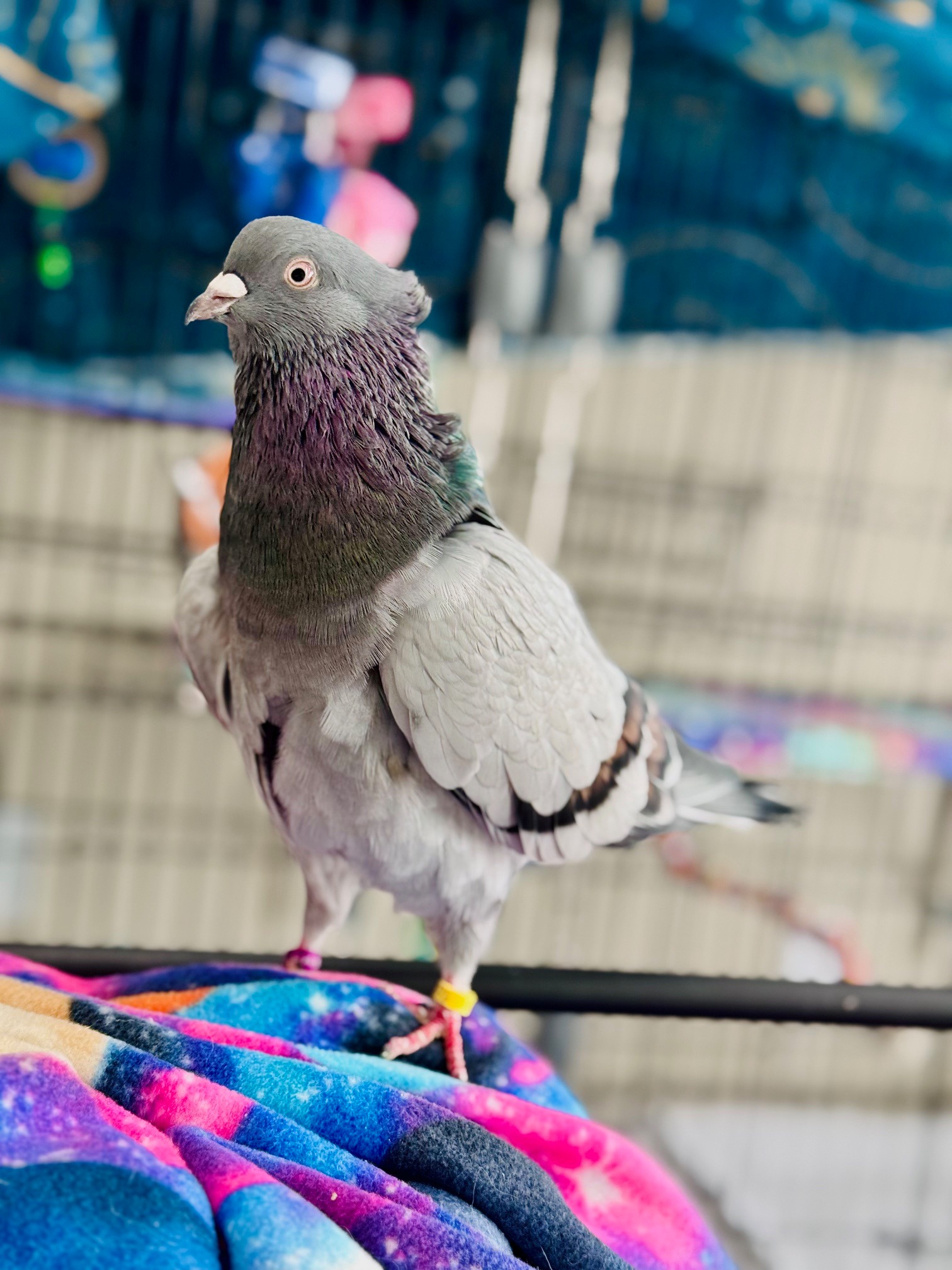
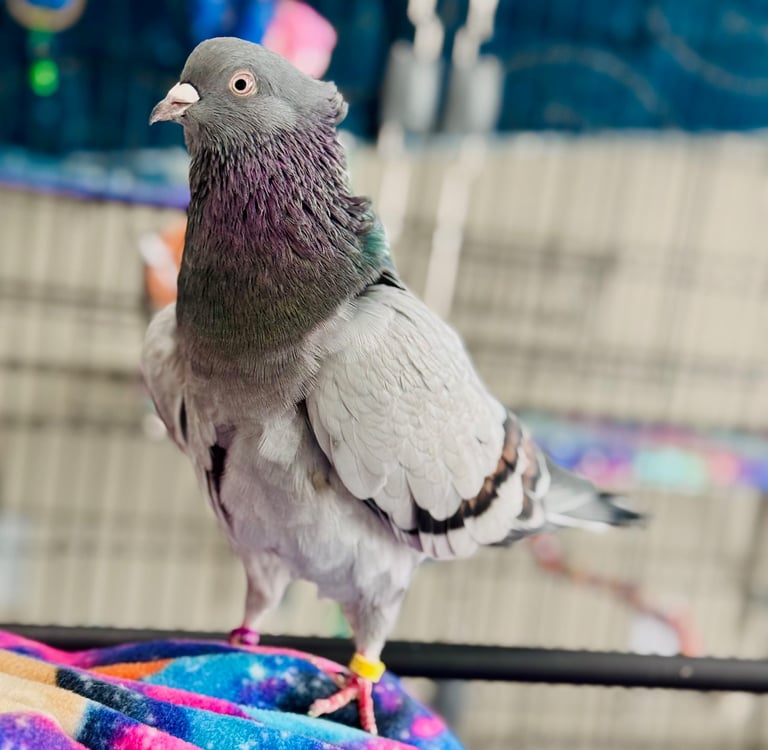
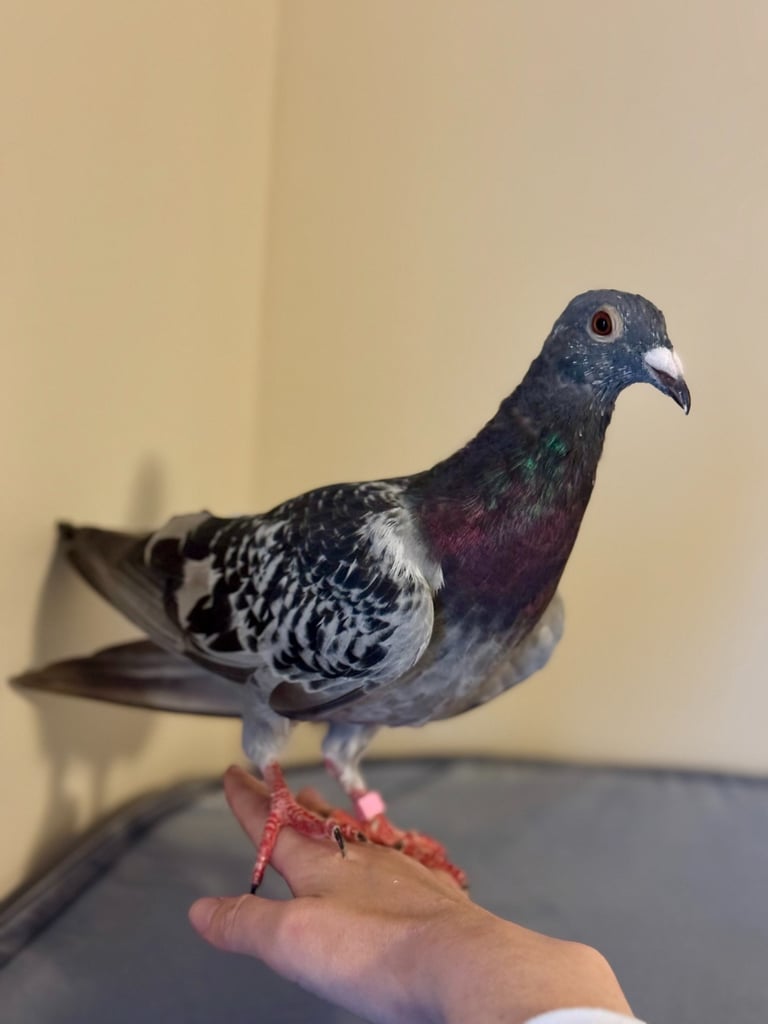
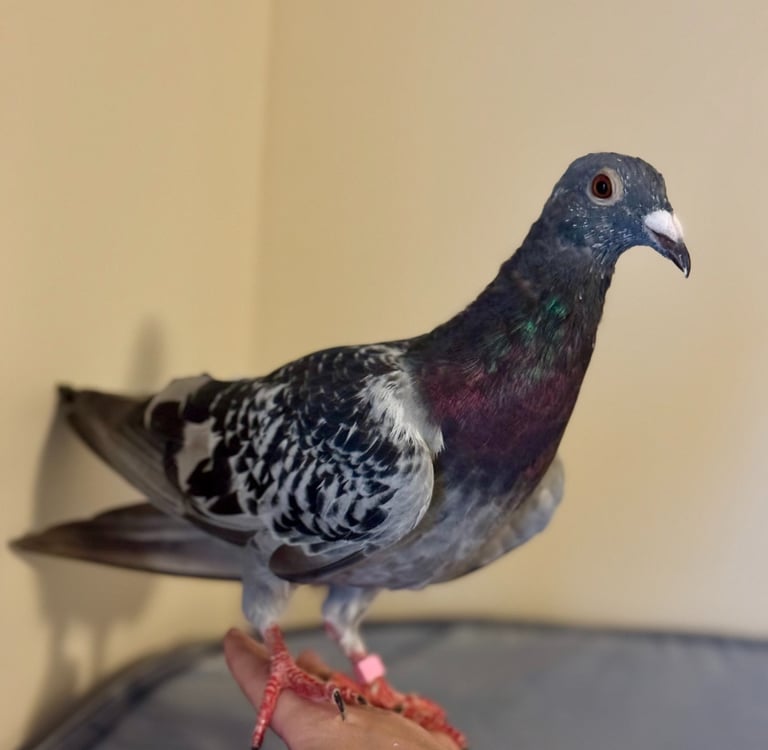
If you’re getting a new pet pigeon, whether adopting from a rescue or a buying from breeder (p.s. we support the first option) you may notice that your new feathered friend comes wearing a band on their leg. These bands can be either split (easily opened) or closed (permanently sealed), and their presence often sparks a common question: Should I keep the band on my pigeon, replace it, or remove it entirely?
The answer isn’t one-size-fits-all. Whether you keep a band on your bird is a personal choice, but it’s helpful to understand the pros, cons, and considerations before making a decision.
Important note: Birds adopted from rescues or purchased from breeders come with no legal obligation to keep the bands they are wearing. You are free to keep, replace, or remove the band as you see fit.
Why You Might Keep a Band On
Identification & Safety
A band is one of the simplest ways to help your pigeon be recognized as a pet. If your bird ever escapes, a band with your contact information, or that of the rescue, can make all the difference in reuniting you.
Rescue Bands often list the rescue's name or initials and their contact information; birds frequently have a second plastic band with identification numbers - these unique numbers are how the bird can be looked up in the rescue's system and linked back to your contract.
Pet bands often list your name (or simply state "Pet") and your contact information.
Breeder bands can sometimes be traced back to the breeder, though records aren’t always guaranteed. Some breeder bands (in our experience) also have broken phone numbers or lapsed NPA memberships (thus, the information on file with the NPA is out-of-date and they band is not traceable).
If your pigeon didn’t come with a band, or you want extra reassurance, you can add a custom “pet” band with your info. This can help ensure your bird finds its way back home if it ever gets lost. This is the same as getting your cat or dog a collar + tag with your information after you bring them home!
Potential Risks of Banding
While bands can be helpful, they are not without potential downsides:
Snagging & injury: Bands can catch on toys, cage bars, or fabrics. This may result in anything from mild scratches to more serious injuries.
Split bands opening: A split band has the potential to break or "split" open in these scenarios, allowing a more favorable outcome.
Closed bands and tight fit: Closed bands do not break away and, if a pigeon develops arthritis, leg injuries, or swelling, the band can cause pain or worse. Some rescues have observed pigeons losing feet—or even part of the leg—due to improperly monitored closed rings.
Damage from tight spaces: Bands can be bent or crushed if a pigeon slips between bars or tight areas. This can cause loss of circulation to foot (and ultimately, loss of the foot).
Further considerations: Because split bands can be removed quickly at home, they generally allow for faster intervention in case of emergencies, reducing the risk of serious injury. Closed bands, on the other hand, require a vet to remove in urgent situations. However, in the case of immigration, closed bands are more legally recognized.
Are these risks high? Not in my experience. However, it is up to every owner to weigh the risks and benefits for their own pets.
Plastic vs. Metal Bands
If you decide to add your own band, custom bands are usually split bands, since closed bands can only be applied when a pigeon is just a few days old.
Metal bands are durable and engraved for permanent lettering, but require special pliers to fit.
Plastic bands are easier to put on, but the lettering can wear off over time.
Both have their place, so your choice will depend on your priorities: longevity of the lettering vs. ease of application.
Fit Considerations
Band fit is mostly a matter of preference and should allow your pigeon to move comfortably. Snug bands may minimize snagging, while slightly looser bands reduce the chance of constriction. For more details on proper sizing, check out this informative YouTube video on banding birds: Bird Banding & Sizing Guide (there is a discussion on sizing within this video).
Bottom Line
Whether to keep, replace, or remove a band from your pigeon is a personal choice. Here’s a simple way to think about it:
Keep a band if identification and the ability to return a lost bird is your priority.
Choose or add a split or custom band if you want identification without compromising safety in emergencies.
Remove a band if it poses a risk, is damaged, or your pigeon has health issues that require it.
Most importantly, monitor your pigeon regularly and check the band for fit and wear. A well-chosen band can be a lifesaver, but even a small mishap can turn hazardous if overlooked.
Rescue pigeons deserve safety, comfort, and a second chance at a happy home, so whatever decision you make about banding, it should prioritize your bird’s well-being.